
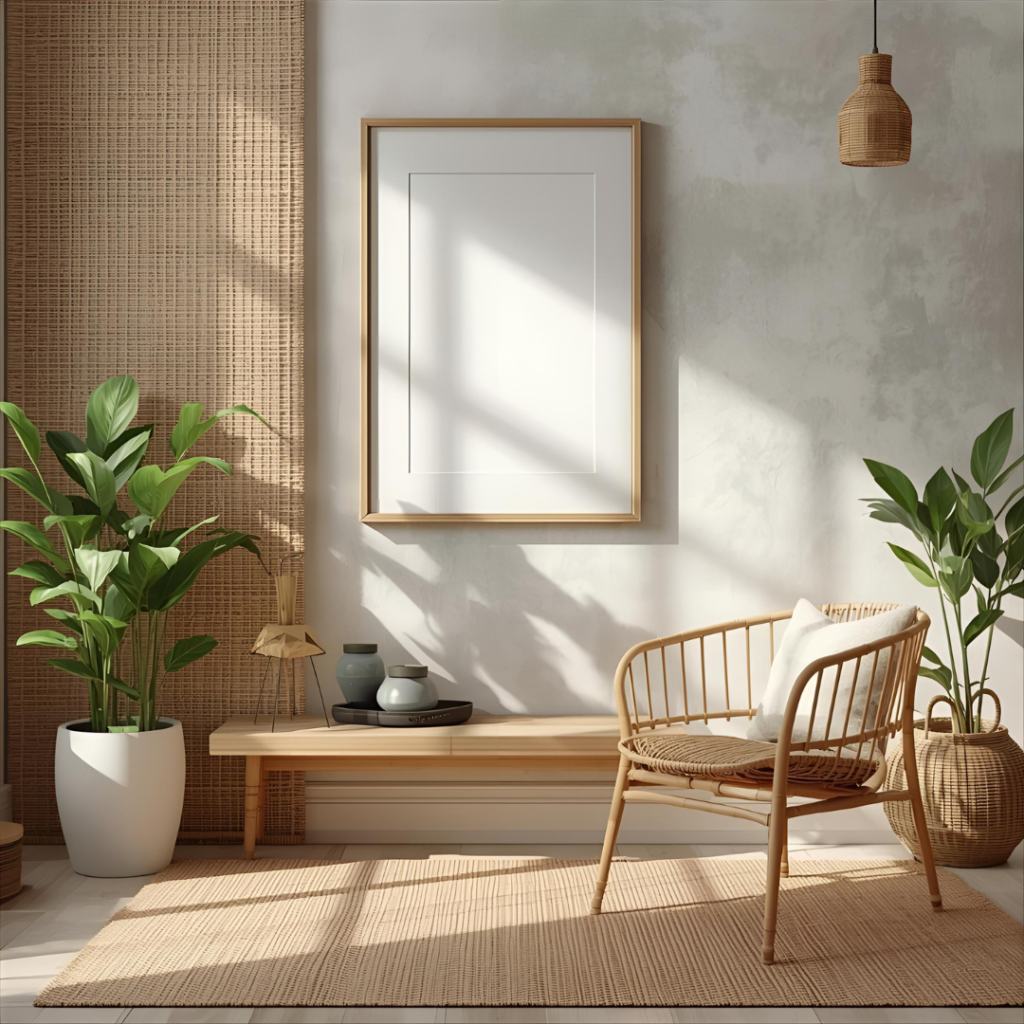
Why Eco-Friendly Interior Decor Matters Today
Eco-friendly interior decor is no longer a trend ….. it’s a lifestyle shift. People today look for materials that are non-toxic, renewable, ethically sourced and long-lasting. The good news? Sustainable decor doesn’t mean compromising on beauty. In fact, most eco-friendly materials have a natural, warm and timeless aesthetic.
This guide breaks down everything you need to know, from fabrics and furniture to paints and lighting …. so you can decorate your home in a way that’s stylish and sustainable.
1. Choose Renewable, Natural Materials
The more renewable the material, the more eco-friendly it is. Look for materials that regenerate quickly or come from natural, minimally processed sources.
Best Renewable Materials for Interiors
- Bamboo
One of the fastest-growing plants. Perfect for flooring, furniture, trays and decor accessories. - Cork
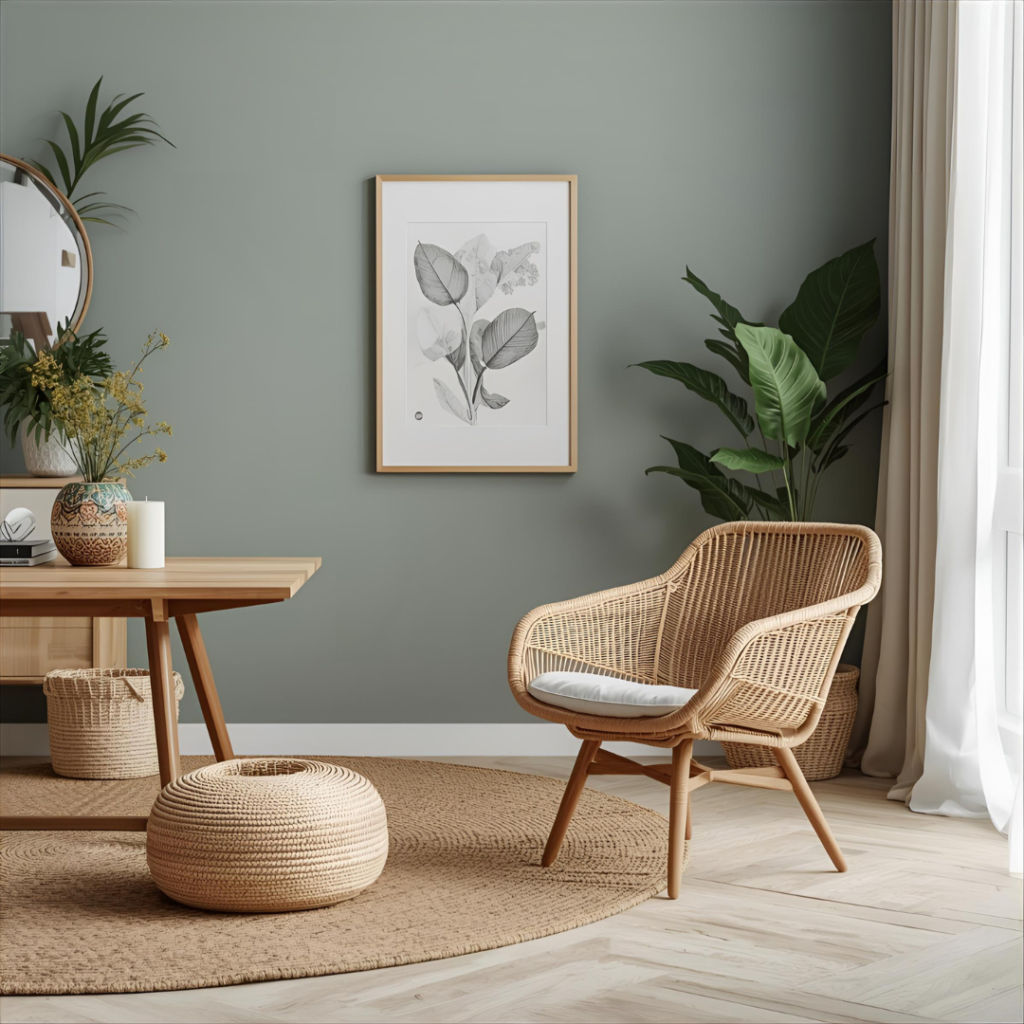
Naturally water-resistant, sound-absorbing and great for flooring or wall panels. - Rattan & Cane
Lightweight, durable and ideal for chairs, baskets and headboards. - Solid Wood (FSC Certified)
Long-lasting and biodegradable. Choose oak, acacia, mango or teak. - Jute & Hemp
Ideal for rugs, poufs, baskets. Low-water crops and biodegradable.
Designer Tip:
Always look for FSC certification (Forest Stewardship Council) for wood, it ensures ethical harvesting.
2. Opt for Non-Toxic Furnishings & Finishes
Most homes today are filled with VOCs (Volatile Organic Compounds) released from paint, varnish, glue, foam and synthetic fabrics.
These harm air quality and can cause allergies, headaches and long-term respiratory issues.
Non-Toxic Things to Include
- Low-VOC or Zero-VOC Paints
Safe for children & pets and improves indoor air quality. - Water-Based Finishes Instead of Chemical Lacquers
- Natural Fabrics
Like cotton, linen, jute, wool, hemp.
Avoid
- PVC
- Synthetic foam mattresses
- Plastics with BPA
- Chemical-based adhesives
Designer Tip:
If your room suddenly smells like “new furniture,” that’s usually chemicals off-gassing. Keep good ventilation.
3. Buy Recycled, Upcycled & Reclaimed Materials
This is the most budget-friendly way to decorate sustainably.
Materials to Look For
- Recycled Glass Decor
Vases, candle holders, wall art. - Reclaimed Wood Furniture
Bookshelves, dining tables, benches, console tables. - Upcycled Furniture
Repurpose old trunks into coffee tables, crates into shelves.
Why choose these?
- Prevent landfill waste
- Add character & uniqueness
- Cost-effective
- Lower carbon footprint
Designer Tip:
Upcycled decor often becomes a statement piece in the room … adding personality and story.
4. Choose Fabrics That Are Organic & Biodegradable
Soft furnishings are where toxins often hide. Choose fabrics that are dyed naturally, ethically made and biodegradable.
Best Eco-Friendly Fabrics
- Organic Cotton
Free from pesticides. - Linen
Long-lasting and biodegradable. - Jute / Sisal
Best for rugs and baskets. - Organic Wool
Regulates temperature naturally.
5. Go for Sustainable Lighting Solutions
Energy-efficient lighting dramatically reduces your energy consumption.
Eco-Friendly Lighting Choices
- LED Lights (Energy Star Certified)
75% less energy than incandescent bulbs. - Solar-Powered Lamps
Great for balconies & outdoors. - Smart Lighting Systems
Reduce electricity wastage.
Avoid: Halogen or incandescent bulbs — high electricity consumption.
6. Choose Local & Handcrafted Decor
Local crafts reduce transportation emissions and support artisans.
Plus, handcrafted decor is unique and long-lasting.
Examples:
- Terracotta planters
- Handwoven baskets
- Local pottery
- Wooden bowls & trays
- Handloom cushion covers/rugs
Designer Tip:
Anything handmade adds texture, warmth and authenticity to the room.
7. Buy Fewer, Better Pieces (The Minimalist Approach)
Sustainability doesn’t mean buying “more” eco-friendly decor , it means buying less but choosing items that last.
What to prioritize:
- Multi-functional furniture
- Timeless designs
- High-quality materials
- Repairable items
Minimalist living = lower waste + longer life cycle.
Eco-Friendly Decor Is Beautiful, Healthy & Timeless
Choosing eco-friendly interior decor materials is one of the best investments you can make for your home, your health and the planet. By prioritizing natural, renewable and non-toxic materials, you create a home that is not only stunning but also safe and sustainable.